Event 1
Celie is married off to Albert
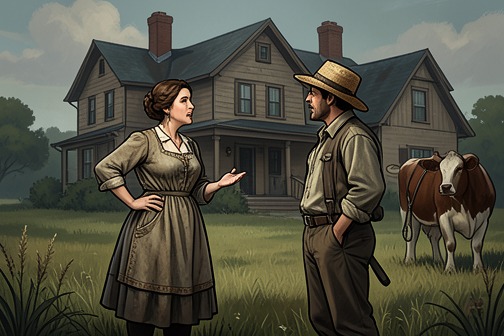
[Celie is married off to Albert](entity:event-recall-event-celie-albert-c490721eca5d) through a bargain made between men who assess her in terms of age, labor, and usefulness. Her father refuses to let [Albert](entity:character-recall-character-albert-6190c3a74040) marry [Nettie](entity:character-recall-character-nettie-b030ff5229bb), who is considered too young and is meant to continue her schooling, and offers [Celie](entity:character-recall-character-celie-e6caa6424a8d) instead. The marriage launches Celie into another household at a moment when she is already longing for her sister, and the wedding’s ordinary chores and violence reveal the cost of that exchange.
## The arrangement
Albert first presents his need in practical terms: his children need a mother. Celie’s father weighs her against that need, describing her as old enough to marry, accustomed to hard work, and able to keep a household. He also emphasizes that she will bring her own linen and the cow she raised, while insisting that Albert cannot have Nettie. His account makes the proposed marriage sound less like a union than a transfer of labor and possessions.
The refusal is decisive for Celie’s hopes. Her father says Nettie must not go with Albert because she is young and should receive more schooling; he even imagines her becoming a schoolteacher. By contrast, he presents Celie as someone who can work hard and will not require Albert to support children. The difference between the sisters’ futures is therefore built into the negotiation: education and protection for Nettie, marriage and service for Celie.
## Celie’s hopes and the wedding
Albert takes from March to June to decide to marry Celie. During that spring, she thinks chiefly about Nettie and imagines that marriage might bring the sisters together again. If Nettie came to live with her, Celie hopes, they could study the schoolbooks and become smart enough to escape. The plan does not make the marriage a choice freely made; it shows Celie trying to turn an imposed situation into a possible route back to her sister.
The wedding day quickly replaces that hope with the demands of the new household. Albert’s twelve-year-old son resents the arrival of a new wife and strikes Celie’s head with a rock, leaving blood running down her chest. Albert tells him to stop, but does little more. Celie bandages herself and then cooks dinner. She is now responsible for Albert’s four children, including two girls whose hair has not been combed since their mother died. When Albert forbids her to cut it, she spends the evening untangling it while the girls cry and accuse her of hurting them. She does not cry herself; lying beside Albert, she thinks of Nettie’s safety and of [Shug Avery](entity:character-recall-character-shug-avery-7aeb95e5f242).
## Marriage as labor and isolation
The wedding establishes a pattern in which Celie’s needs recede behind the household’s. She cooks, tends the children, and carries out domestic work even after being injured. At night, Albert has sex with her; Celie thinks that he has done the same to Shug Avery and wonders whether Shug might like it, then puts her arm around him. That gesture does not erase the coercive conditions surrounding the marriage. It shows Celie trying to understand what is happening by imagining another woman’s experience.
The separation from Nettie deepens when Albert withholds her letters. Years later, Nettie writes that she has continued sending letters, but Albert said Celie would never hear from her again. Nettie has resorted to writing only at [Christmas](entity:time-recall-time-christmas-a573265d0167) and [Easter](entity:time-recall-time-easter-4ee721615d13), hoping her letters might pass unnoticed among the holiday greetings. Her message insists that she is alive and that [Olivia](entity:character-recall-character-olivia-b40a5119f315) and Celie’s son are well. The marriage thus becomes part of a larger isolation: Albert’s control of the mail keeps Celie from knowing that her sister and children are alive.
## The longer arc
The later revelations about Olivia and [Adam](entity:character-recall-character-adam-7e6d3c5ddcc8) recast the family ties obscured during Celie’s marriage. Nettie explains that the children were raised by her and [Samuel](entity:character-recall-character-samuel-8ae6e83fd652) with love, and identifies Celie as their mother. When she finally sees [Corrine](entity:character-recall-character-corrine-fbcc9fdc7d6e), Nettie states plainly that she is the children’s aunt and Celie is their older sister and mother. After many years apart, Nettie returns with Samuel, Olivia, Adam, and Tashi; Celie and Nettie recognize one another and embrace, and the family is introduced to the people gathered with Celie.
Celie’s later work also contrasts sharply with the role assigned to her at marriage. In [Memphis](entity:location-recall-location-b5b0e61d1dc9), she makes pants in many colors, sizes, fabrics, and designs; the work grows from a room full of patterns and garments into a business. Shug encourages her to advertise, raise prices, and bring women in to cut and sew while Celie designs. The skill once valued by Celie’s father chiefly as a way to make her useful in a husband’s home becomes the basis of her livelihood. The marriage remains a defining instance of her limited choices, but it does not define the full course of her life.
Event 2
Nettie leaves Celie and loses contact with her

[Nettie leaves Celie and loses contact with her](entity:event-recall-event-nettie-celie-6533a86ae996) when [Albert](entity:character-recall-character-albert-6190c3a74040) ends the sisters’ shared refuge and then uses violence and a threat to cut off their communication. The separation first looks like a painful departure followed by silence; [Nettie](entity:character-recall-character-nettie-b030ff5229bb)’s later letters reveal that the silence conceals both Albert’s attack and years of attempts to reach [Celie](entity:character-recall-character-celie-e6caa6424a8d). Her journey from a nearby household to Africa makes the personal rupture a separation across distance, history, and almost thirty years.
## The Order to Leave and a Promise to Write
Nettie’s departure begins when Albert declares that he and Celie have done all they can for her and that she must go. When Celie asks where Nettie will go, Albert says he does not care. Nettie, however, is glad to leave, despite hating the thought of leaving Celie behind with Albert and the children. She describes that prospect as like seeing Celie buried. Celie thinks that being buried might at least spare her work, but comforts herself by saying that, as long as she can spell God, she has someone alongside her.
Celie has little practical help to offer. She gives Nettie the name of Reverend Mr. ____ and advises her to ask his wife for assistance, because that is the only woman Celie has seen with money. She also tells Nettie to write. Nettie asks what Celie means, and Celie repeats the instruction. Nettie promises that nothing but death will keep her from writing. The exchange makes their bond explicit at the very moment Albert is forcing them apart: the sisters cannot choose whether Nettie must leave, but they make continued contact the condition of their separation.
At first, the promise seems to fail. Celie records that Nettie never writes. The apparent silence follows a departure already shadowed by danger: Celie remains with Albert, while Nettie must make her way to a new household with little more than a name and a letter-writing promise. The gap between Nettie’s vow and Celie’s experience becomes one of the event’s central reversals.
## Albert’s Attack and the Broken Correspondence
Nettie’s later account reveals what happened after she left. Albert followed her on horseback. Once they were well out of sight of the house, he caught up, tried to talk to her, then got down from his horse and attempted to kiss her and drag her into the woods. Nettie fought back and hurt him badly enough to make him leave her alone. Albert responded by threatening that, because of what she had done, she would never hear from Celie again and Celie would never hear from her.
The attack turns the sisters’ separation from a consequence of Albert’s order into an act of coercive control. Nettie’s resistance enables her to escape him, but Albert makes the cost of that resistance explicit: he claims power over the sisters’ future communication. Nettie is shaking with anger afterward. Someone gives her a ride into town and points her toward the Reverend’s home, where a little girl opens the door with Celie’s eyes in her face. That first sight of the child offers Nettie an unexpected connection to Celie even as Albert’s threat seeks to extinguish the connection between the sisters.
[Nettie’s letters](entity:object-recall-object-nettie-s-letters-f3314228768f) later show that the threat did not make her stop caring or trying to communicate. She writes to Celie that she misses her, thinks of her constantly, and hopes she will write when she has the chance. Nettie explains that she once tore up letters written on the ship to Africa, dropping the pieces into the water because she believed Albert would never let Celie receive them. Later, she feels differently: writing to Celie becomes as necessary to her as prayer, and not writing leaves her feeling locked inside herself. The silence Celie experiences is therefore not proof that Nettie forgot her; it is bound up with fear that Albert controls the letters and with the sisters’ inability to know what the other has received.
## From the Reverend’s Household to Africa
At the Reverend’s home, Nettie joins the household of [Corrine](entity:character-recall-character-corrine-fbcc9fdc7d6e) and [Samuel](entity:character-recall-character-samuel-8ae6e83fd652), who include her in their church work and treat her as part of their life. Their children, [Olivia](entity:character-recall-character-olivia-b40a5119f315) and [Adam](entity:character-recall-character-adam-7e6d3c5ddcc8), become part of the family world she describes to Celie. The letters carry practical details alongside expressions of longing: Nettie names the people around her, tells Celie where they live, and asks her to write. Her new belonging does not replace the absent sister. Nettie says she feels less alone with the family, yet insists that she misses Celie with all her heart.
Nettie’s route eventually carries her far beyond the Reverend’s home. A missionary who was meant to accompany Corrine and Samuel to Africa marries a man unwilling to let her go, leaving a ticket available. Nettie has been unable to find work nearby; although she never imagined Africa as a real place for herself, she accepts the opportunity. She travels with the family, later recording their departure from Southampton on July 24, their arrival in [Monrovia](entity:location-recall-location-2476bf5776c8), [Liberia](entity:location-recall-location-e4f1a437ab92), on September 12, and stops in Lisbon and [Dakar](entity:location-recall-location-a60fc13a10c2) along the way. The journey gives the separation a wider geography: the sisters are divided not only by Albert’s household and blocked letters, but by an ocean and Nettie’s life in Africa.
When Nettie first sees the African coast, the sight moves her, Corrine, and Samuel to kneel on deck and give thanks for the land their ancestors had longed to see again. Her account connects her individual departure to a history of enslavement and displacement, while keeping Celie as the intimate addressee to whom she wants to explain what the journey means. The letters thus hold two distances together: the historical distance of the African diaspora and the private distance between sisters who still write toward one another.
## Nearly Thirty Years Apart
The separation endures for nearly thirty years without a word passing between the sisters as Nettie understands it. Near the time she expects to return to the [United States](entity:location-recall-location-5d55e9152db1), she does not know whether Celie is alive. She wonders whether Albert’s abuse and the years of childbearing have damaged the open spirit she remembers, and keeps those fears from Olivia and Adam while discussing them with Samuel. The children ask about Celie, and Nettie tells them that Tashi reminds her of her sister. Their delight at this comparison shows how Celie remains present in Nettie’s family life despite her absence.
The reunion Nettie anticipates has not yet happened in these letters, and her uncertainty gives the separation its unresolved force: she can imagine returning, but cannot know what years of silence have done to the person she hopes to see. The later correspondence also changes the meaning of Celie’s earlier belief that Nettie never wrote. Nettie had promised to write, did write, and continued to address Celie across distance; what failed was the sisters’ ability to receive and answer one another. Their prolonged separation is therefore both a physical departure and a communication broken by Albert’s violence, sustained by Nettie’s attachment, and carried forward in letters whose existence Celie does not initially know.
Event 3
Sofia leaves Harpo
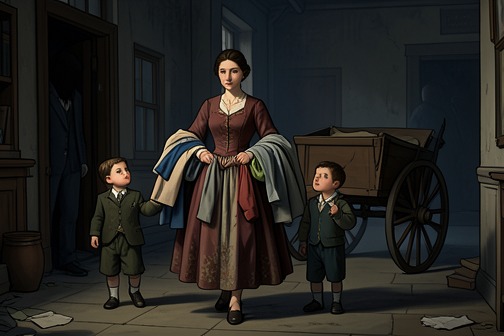
[Sofia leaves Harpo](entity:event-recall-event-sofia-harpo-f9da0c50425b) in a departure shaped by both exhaustion and attachment. Tired of a marriage in which [Harpo](entity:character-recall-character-harpo-6f4ff9b0fd17) wants obedience rather than partnership, she considers taking their children to stay with her sister [Odessa](entity:character-recall-character-odessa-f865978edf6a). When Odessa and her other sisters arrive in wagons, Sofia goes with them, carrying the children and a few household belongings. The separation is neither presented as simple escape nor as a clean end to love: Sofia admits that she still loves Harpo, but needs a break from the life they have made together.
## Causes and Decision
Sofia names the central conflict plainly: since their marriage, Harpo has focused on making her mind him. She experiences his demands not as the care of a husband but as an attempt to turn a wife into a subordinate. The strain is also intimate. She says that Harpo seems not to notice what she feels during sex, leaving her sense of him as attending only to himself. Her anger reaches the point where she says that this indifference makes her want to kill him. The account connects her wish to leave not to one isolated quarrel but to the steady experience of being disregarded and controlled.
Odessa offers a practical destination. Her husband has been drafted, and she is living on a small farm without children of her own; Sofia considers staying there for a while with her children. The possibility moves [Celie](entity:character-recall-character-celie-e6caa6424a8d) sharply, because it calls to mind her own absent sister, [Nettie](entity:character-recall-character-nettie-b030ff5229bb), and the relief of having someone to run to. Sofia’s potential departure therefore touches more than the immediate marriage: it brings into view the difference between being trapped without refuge and having kin who can offer a place to go.
Sofia does not move from frustration to certainty in a straight line. She says she may not go, because deep down she still loves Harpo, then laughs and says she needs a vacation. Her words hold affection and fatigue together without resolving the conflict between them. Even while considering whether to leave, she returns to the work of making shingles for the roof. The ordinary labor continues as the decision remains unsettled, emphasizing how the strain of marriage is embedded in everyday life rather than confined to an argument.
## Departure with Her Sisters
Sofia’s sisters arrive early one morning in two wagons. They are described as large, strong, healthy women, and their collective presence gives the departure practical force: Sofia is not setting out alone. She has little to pack beyond clothes for herself and the children, a mattress she made the previous winter, a looking glass, and a rocking chair. Celie adds a quilt at the last minute, thinking that the family may face cold weather and might otherwise have to sleep on the floor. These objects make the separation concrete. Sofia leaves with the necessities of a household, and Celie’s gift supplies one more measure of care for the uncertain life ahead.
Harpo remains on the steps, making a fishing net and acting as though he does not care. His occasional whistling sounds diminished beside his customary tune, which makes his composure seem less secure than it appears. When Celie asks whether he will let Sofia go, Harpo answers that she has made up her mind and he cannot stop her. His response acknowledges her choice rather than claiming authority to reverse it. The sisters move together through the house, their weight and activity making it shake, while Harpo and Celie sit outside and hear them. The contrast sets the women’s coordinated support against the quieter household Sofia is leaving.
At the final moment, Sofia hands Harpo the baby, places the baby on her hip, and shoulders a sack of diapers and food. She gathers the other children and tells them to say goodbye to their father, then hugs Celie as best she can while carrying the baby. She climbs into the wagon. Most of her sisters have a child between their knees as the wagons depart quietly past the yard and up the road. The children remain with Sofia, while Harpo is left behind; the scene makes the separation a family departure as well as a break between spouses.
## Aftermath and Significance
Sofia’s departure does not erase her attachment to Harpo, but it changes the balance of the relationship: she acts on her decision, and he does not prevent her. Six months later, Harpo is described as a different man. Formerly a homebody, he is now often on the road. The account places this change after Sofia’s absence, marking the departure as a turning point in his life as well as hers, without reducing either person’s response to a simple resolution.
The event also links intimate conflict to a network of women’s care. Odessa’s offer gives Sofia somewhere to go; her sisters provide transport and accompany her; Celie contributes a quilt; and Sofia leaves with the children and the provisions she can carry. What Harpo had framed as a struggle to make his wife obey is answered by a decision supported by kin. In this sense, the departure marks a change from endurance within the marriage to movement beyond it, while preserving the emotional complexity of a woman who leaves despite still loving her husband.
Event 4
Celie cares for Shug after she falls ill
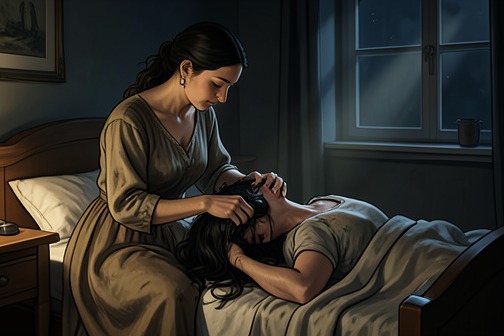
[Celie cares for Shug after she falls ill](entity:event-recall-event-shug-celie-b79552aa992c) in an episode that reverses the distance between the women: the singer whom the town rejects arrives dependent on care, and [Celie](entity:character-recall-character-celie-e6caa6424a8d) finds herself drawn to her through the intimate work of washing and grooming her. The illness exposes the cruelty of public judgment, while private gestures—trembling hands, a comb through Shug’s hair, her weight leaning against Celie’s knees—begin to make care a form of attachment.
## Illness and Public Condemnation
Shug’s illness is introduced through rumor rather than a clear diagnosis. Celie hears women at church suggest that Shug is dying, perhaps of tuberculosis or a disease they call shameful, but she does not ask them to explain. The uncertainty matters: the town treats Shug’s sickness less as a reason to help her than as an occasion to repeat its suspicions about her character.
The women’s judgments are sharpened by the preacher’s sermon. He does not name Shug, yet his descriptions of a woman who wears short skirts, smokes, drinks gin, sings for money, and takes other women’s men make his target unmistakable. The sermon turns her illness into public evidence against her. The congregation answers against Shug, and [Albert](entity:character-recall-character-albert-6190c3a74040), sitting nearby, does not defend her. Celie notices his silence and the women smiling toward him; the contrast places Shug’s isolation beside the church’s approval of respectable male presence.
## Albert Brings Shug Home
After the sermon, Albert returns home and calls [Harpo](entity:character-recall-character-harpo-6f4ff9b0fd17) over to hitch up the wagon. He asks Harpo to help him get Shug into the house. The action cuts against the town’s refusal to take her in: Albert does not leave her outside the household, although the scene does not erase his earlier silence or establish a simple change in his character. Shug and Albert have had three children together, but he is squeamish about bathing her. His willingness to bring her home and his discomfort with tending her body coexist.
Celie’s first view of Shug is charged with anticipation. She recognizes a foot before Shug climbs down between Albert and Harpo, dressed in a red wool dress, black beads, a glossy black hat with feathers, and a small snakeskin bag matched to her shoes. The vivid clothing makes the arrival emphatically unlike a passive image of illness: Shug is weak, but she comes into the house dressed with force and style.
Under her powder, Shug’s face is dark, with a long pointed nose, full lips, and large, feverish eyes. She looks Celie over and laughs before calling her ugly. The insult is a sharp first exchange, not a softened bedside welcome. Celie’s attention holds both facts at once: Shug is gravely sick, and she remains formidable enough to meet the people around her with hostility and a cutting assessment.
## Washing and the Intimacy of Care
The turning point comes when Celie bathes Shug. Albert cannot bring himself to do it, and Celie is left alone with the physical closeness the task requires. Seeing Shug’s naked body gives Celie an unfamiliar intensity; she describes her hands as trembling and her breath as short. Washing is practical care, yet its bodily immediacy makes it feel to her like prayer. The scene joins vulnerability to desire without making either disappear: Shug is frail, but her sharp manner and deliberate self-possession persist.
Shug tests the situation rather than treating Celie’s attention as invisible. She asks whether Celie has ever seen a naked woman; Celie answers that she has seen Sofia, whom she experiences as a sister. Shug invites Celie to look, even while acknowledging how ill and thin she has become, and poses with a hand on her hip. Celie’s response is not merely dutiful service. The bath becomes one of their earliest intimate encounters, framed by Shug’s taunting confidence and Celie’s bodily astonishment.
## Grooming, Recognition, and the Aftermath
As Shug gains enough strength to sit up in bed, Celie washes and combs her hair. She describes it as unusually short and tightly curled and says she loves every strand. She keeps the hair that comes out in the comb, imagining that one day she might use a net to make a hairpiece and give her own hair more height. The small act of saving what the comb removes extends the care beyond the immediate task: Celie attends closely to Shug’s body and carries away a tangible remnant of that attention.
Celie combs and pats Shug as she might tend a doll, [Olivia](entity:character-recall-character-olivia-b40a5119f315), or her own mother. At first Shug urges her to finish; then she relaxes and leans back against Celie’s knees. She associates the comfort of the gesture with being cared for by her mother or perhaps her grandmother. The scene gives their closeness a tender, maternal register without reducing it to that alone: Celie’s earlier desire remains part of the encounter, now joined by reciprocal ease and physical trust.
While Celie tends her hair, Shug reaches for another cigarette and hums a tune she has made up. She tells Celie that Celie helped draw it out of her. The moment links grooming to a new form of exchange: Celie is not only the person who cleans and comforts Shug but also someone whose presence can contribute to what Shug creates. The episode does not resolve their relationship, but it changes its terms. A woman condemned and abandoned in public is received into care at home, and the work of caring gives Celie a closeness neither sermon nor rumor could define.
Event 5
Celie and Shug establish an intimate relationship

[Celie and Shug establish an intimate relationship](entity:event-recall-event-celie-shug-140c007a65f1) in a scene that moves from a request for company to the disclosure of sexual violence, and then to mutual affection and touch. Its decisive turn is not simply that the women become lovers: Shug’s care gives [Celie](entity:character-recall-character-celie-e6caa6424a8d) room to tell what happened to her, while Celie’s response to Shug makes their intimacy reciprocal. The scene sets tenderness against the coercion Celie has known from [Albert](entity:character-recall-character-albert-6190c3a74040) and makes physical closeness newly legible as something that can include comfort, choice, and pleasure.
## The Invitation and the Conversation
With Albert and [Grady](entity:character-recall-character-grady-3de968e01047) away together, Shug asks Celie whether she can sleep beside her. Shug is cold alone in her and Grady’s bed; the practical request creates a private space in which the women can talk. Their conversation moves from ordinary subjects toward sex. Shug uses blunt language for it, then asks Celie about the father of her children. That question redirects the scene: what begins as talk between two women sharing a room becomes an occasion for Celie to narrate violence she has endured.
The change in subject matters because Celie does not describe sex as an abstract topic. She recalls being alone in the girls’ room when her father came in with scissors, a comb, a brush, and a stool, asking her to trim his hair. While she did so, he watched her uneasily, then seized and assaulted her. Afterward, he made her finish cutting his hair. The ordinary tools of a familiar childhood activity remain in the memory alongside the assault: Celie had loved cutting hair since she was little, but her father’s repeated visits with the scissors and stool eventually made her cry as soon as she saw him coming.
## Telling What Happened
Celie remembers the injury not as a distant fact but as a return of pain and surprise. In Shug’s arms, she cries repeatedly; the memory brings back how the assault hurt, the sting as she finished the haircut, and blood running down her leg and staining her stocking. She also recalls that her father stopped looking at her directly afterward. Her account includes the deception that concealed his conduct: when Celie’s mother questioned why his hair was in the girls’ room, he claimed that a boy had been there and that the hair belonged to him. The cover story shifted suspicion away from the person who had entered the room and made Celie’s own account harder to establish.
Shug answers first with physical comfort, putting her arms around Celie and kissing the tears on her face. Celie goes on to describe the wider pattern of abandonment and abuse in her life: her mother has died, [Nettie](entity:character-recall-character-nettie-b030ff5229bb) has run away, and Albert has taken her in to care for his children without asking about her own needs. She describes his sexual treatment as repeated and coercive, including when her head was bandaged, and concludes that nobody has loved her. The disclosure places the present encounter against a history in which sex and dependency have been imposed on her rather than offered as mutual care.
## A Reciprocal Intimacy
Shug answers Celie’s sense of being unloved by telling her that she loves her, then kisses her on the mouth. The movement from speech to touch is immediate, but Celie is not merely the recipient of comfort: she kisses Shug back. They continue kissing and touch one another. Celie admits that she knows little about sex; Shug acknowledges that she does not know much either. Their uncertainty does not halt the encounter. Instead, the scene presents intimacy as something they explore together rather than an act directed by a more experienced partner or controlled by a man.
Celie describes a soft, wet sensation on her breast by comparing it to the mouth of one of her lost babies. Later, she says she acts like a lost baby herself. These images connect adult intimacy to an unmet need for tenderness and care, without reducing the encounter to childhood: the women are kissing and touching each other in the present, and Celie participates. Shug’s arms, kisses, and declaration of love answer the vulnerability revealed in Celie’s account with bodily affection rather than disbelief or blame.
## The Scene’s Contrast and Consequence
When Albert and Grady return around daybreak, Celie and Shug are asleep together, Shug turned away and Celie’s arms around her waist. Celie measures the feeling of that sleep against other forms of closeness: it recalls sleeping with her mother, whom she can barely remember, and with Nettie, though that had never felt as good. She describes the warmth and cushioning of the bed and Shug’s body, and says it feels like heaven. The comparison with sleeping beside Albert makes the contrast explicit: shared physical space with Shug feels unlike the marriage in which Celie has experienced coercion.
The scene’s emotional movement is therefore also a change in what Celie can say and experience. Her account joins the violence of her past to the tenderness of the present, while Shug’s response turns listening into an act of care and Celie’s returning kiss makes that care mutual. Their bond begins not with a promise of an easy future but with a moment in which Celie’s pain is witnessed and her desire is met without force. In the letter-based narration, the scene is preserved as both testimony about abuse and the record of a new form of closeness.
Event 6
Shug and Celie discover Nettie's withheld letters
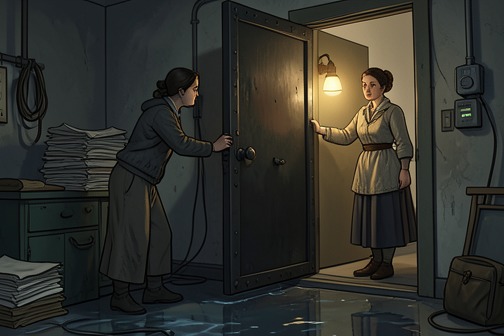
[Shug and Celie discover Nettie's withheld letters](entity:event-recall-event-shug-celie-nettie-e59535fce9d8) in [Albert](entity:character-recall-character-albert-6190c3a74040)’s locked trunk, turning a long silence into proof of deliberate concealment and restoring a connection [Celie](entity:character-recall-character-celie-e6caa6424a8d) had nearly given up for dead. The letters do more than carry news: they reveal [Nettie](entity:character-recall-character-nettie-b030ff5229bb)’s life in Africa and disclose that [Olivia](entity:character-recall-character-olivia-b40a5119f315) and [Adam](entity:character-recall-character-adam-7e6d3c5ddcc8), whom Nettie helps raise, are Celie’s children.
## Clues and delayed recognition
The discovery begins with Celie’s unanswered hope. Each day she watches Albert return from the mailbox, waiting for news from Nettie; with none arriving, she concludes that her sister must be dead. Shug notices a possible explanation in the mail itself. She recalls seeing letters marked with unfamiliar-looking stamps when she and Albert went to the mailbox, and remembers Albert putting them into his inside pocket without explaining what they were. When she once asked to see the stamps, he said he would take them out later, but never did.
At first, Celie dismisses the clue. To her, the stamps look like the ordinary ones nearby, and the foreign-looking figures on them mean little. Even after Shug describes a stamp showing a small, stout white woman, Celie can only wonder whether the letters come from [England](entity:location-recall-location-edbf4fdebc64) or Africa. The stamps signal distance, but do not yet tell her where Nettie is. That uncertainty makes the ordinary act of collecting the mail a source of suspense: evidence of a letter has appeared, but the person waiting for it still cannot reach its message.
The suspicion sharpens when Shug brings Celie a letter on a Saturday morning. Its stamps include a queen of England and images of peanuts, coconuts, and rubber trees, alongside the word Africa. Celie recognizes that the letter is from far away, yet still cannot locate Nettie. Shug states the implication plainly: Albert has been keeping the letters. Celie resists believing that he would go so far, even though she knows he can be mean; Shug insists that he is capable of it. The exchange shifts Celie’s understanding of the silence: Nettie may not have stopped writing at all.
## Opening Albert’s trunk
Once Celie knows Albert has hidden the letters, she identifies where he keeps them. Important things to him go into his trunk, which he keeps locked; Shug can obtain the key. One night, when Albert and [Grady](entity:character-recall-character-grady-3de968e01047) are gone, Shug and Celie open it. They find Shug’s underclothes and picture postcards, and, beneath Albert’s tobacco, a large collection of [Nettie’s letters](entity:object-recall-object-nettie-s-letters-f3314228768f). The letters vary in thickness, and some have been opened while others have not. Their different states make the cache feel less like one forgotten message than a correspondence kept out of Celie’s reach over time.
Shug proposes a way to read them without making the concealment obvious: remove the letters while leaving the envelopes as they are. Celie heats the stove and puts on the kettle. Together they steam open the envelopes, spread the letters across the table, and then return the envelopes to the trunk. Their care is practical as well as emotional. They want Nettie’s words, but also need to preserve the appearance that Albert’s hiding place has not been disturbed. Shug offers to put the letters in order, and Celie asks that they continue in Shug and Grady’s room rather than there.
The recovery reverses the conditions Albert imposed. His locked trunk had made the letters inaccessible, and the concealment had made Celie interpret silence as loss. Now Shug’s access to the key and Celie’s patient work with the kettle turn hidden correspondence back into something readable. The discovery does not undo the years of separation, but it gives Celie evidence that Nettie continued to write and that Albert, not Nettie, stood between the sisters.
## Nettie’s letters and what they reveal
Among the letters Celie reads is one dated two months after an earlier letter. Nettie explains that she wrote to Celie almost every day during the voyage to Africa. By the time the ship docked, however, she felt so defeated by the certainty that Albert would not let Celie receive her letters that she tore those pages into pieces and dropped them into the water. She later changed her mind and resumed writing. The account reveals that the correspondence was interrupted not simply by distance but by Nettie’s belief that her words could not cross the barrier Albert had created.
Nettie connects writing to the bond between the sisters. She recalls Celie’s explanation that writing had let her express what she was too ashamed to say even to God. Nettie says that when she does not write, she feels as bad as when she does not pray: closed in on herself and overwhelmed by loneliness. The letters therefore serve both as news and as a means of sustaining connection. Their recovery answers Celie’s isolation with the voice she had feared was gone.
The same letter explains why Nettie went to Africa. A missionary expected to accompany [Corrine](entity:character-recall-character-corrine-fbcc9fdc7d6e) and [Samuel](entity:character-recall-character-samuel-8ae6e83fd652) to help with the children and establish a school married a man who refused to let her go, leaving a ticket available. At the same time, Nettie could find no work nearby. She had not imagined Africa as a real destination, despite Samuel, Corrine, and the children speaking about it; circumstances carried her there. In later testimony, Nettie explains that Olivia and Adam are Celie’s children, adopted and raised by Corrine and Samuel, and that Nettie has taken on the task of watching over them. A letter that first confirms Nettie’s location thus expands into a revelation of family ties and of the children’s life with the people who have cared for them.
## Consequences and narrative significance
The discovery changes the meaning of absence. Celie had treated the lack of news as confirmation that Nettie was dead; the letters show that Nettie had been writing, that she was alive in Africa, and that her silence had been produced by Albert’s concealment and Nettie’s despair about reaching her sister. The stamps that once offered only vague signs of elsewhere now belong to a correspondence with a history, a writer, and a destination.
The sequence also makes the material form of the letters central to the revelation. Stamps, envelopes, tobacco, a locked trunk, a key, a kettle, and pages laid on a table carry the plot from suspicion to knowledge. The women do not merely learn that Albert has withheld the mail: they physically retrieve and read the messages while leaving the envelopes behind. Through that careful act, Celie regains access to Nettie’s words and learns that the separation has hidden not only a sister’s whereabouts but also the truth about her children.
Event 7
A colonial road cuts through Olinka and leads to the seizure of village land
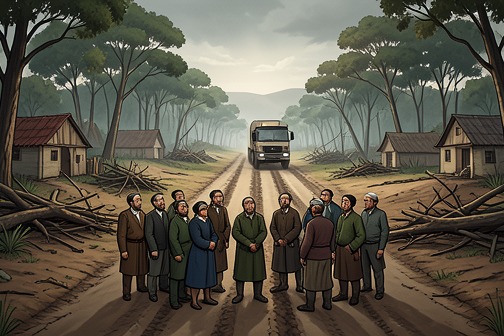
The road driven through [Olinka Village](entity:location-recall-location-ba43ab673f13) turns a promise of connection into an instrument of dispossession. In [Nettie](entity:character-recall-character-nettie-b030ff5229bb)’s account to [Celie](entity:character-recall-character-celie-e6caa6424a8d), the builders first appear as guests at a village celebration; soon they return armed, level homes and communal buildings, and make way for a rubber plantation. The road is not an isolated construction project: it announces that the villagers’ land and water have been claimed by others, and it begins a chain of displacement, cultural loss, and illness.
## A Welcome That Becomes a Betrayal
The road reached the cassava fields about nine months before Nettie wrote to Celie. The Olinka, who delighted in celebrations, prepared a feast for the roadbuilders. The workers talked about how quickly a tarmac road would let villagers travel to the coast, a journey of three days on foot. Their talk encouraged the Olinka to imagine the road as a benefit to the village. The men also admired a roadbuilder’s bicycle and spoke of someday owning bicycles of their own, although no one in Olinka Village had one.
The celebration was therefore grounded in a particular expectation: that a road reaching the village would make travel easier and bring its residents into closer contact with the coast. The builders’ presence seemed to confirm that expectation. The next morning, however, the villagers discovered that the road was not finished. The workers had orders to continue for another thirty miles, along its existing course through Olinka Village. Before Nettie and the others were fully awake, construction had reached [Catherine](entity:character-recall-character-catherine-48275454cf20)’s newly planted yam field. The promised route to the coast was also a route through the community’s farms and homes.
## The Road Through the Village
The Olinka protested, but the builders were armed and had orders to shoot. The villagers stood by as crops and houses were destroyed; every hut in the planned path was leveled. The church, the school, and Nettie’s hut were among the buildings brought down within hours. The group managed to save its possessions, but the paved road cut through the village’s middle and left it, in Nettie’s description, gutted. Its damage was not confined to individual buildings: the road divided the settlement while making its destruction part of a larger development plan.
The chief set out for the coast to seek explanations and reparations. Two weeks later he returned with news that the entire territory, including the village, belonged to a rubber manufacturer in [England](entity:location-recall-location-edbf4fdebc64). On his journey he had seen hundreds of people clearing forests on both sides of the road and planting rubber trees. Mahogany and other trees, as well as game, were being destroyed; the forest was being made bare for cultivation. What the Olinka had experienced as a road crossing their land was connected to a far wider transformation of that land into plantation territory.
## Ownership, Water, and Displacement
The chief eventually reached the governor’s mansion and met the white official who had ordered the roadbuilders. The official knew the Olinka only from a map. The exchange was further constrained by language: the chief knew little English beyond occasional phrases learned from Joseph. The account makes the imbalance plain. Decisions affecting the village had been made by an official with no direct knowledge of its people, while the chief had to seek an explanation from the authority that had authorized the destruction.
The consequences extended beyond the road’s path. Because the Olinka no longer owned the village, they were told they must pay rent to live there; because the water no longer belonged to them, they must pay a water tax to use it. At first, villagers laughed at the apparent absurdity of charging them for a place where they had lived for generations. The chief did not laugh. His journey had established that the threat was not a misunderstanding: the people who had occupied and cared for the land were now being treated as tenants on it.
The seizure eventually forced the Olinka and the missionaries to move. The plantation builders wanted the village site as their headquarters because it was the only place for miles with a steady supply of fresh water. The displaced community was placed on barren land with no water for six months of the year. In the dry period, residents had to buy water from the planters; during the rainy season, they relied on a river and tried to make cisterns by digging into nearby rocks. They collected water in discarded oil drums brought by the builders. The displacement thus transferred not only land but also control over the resource on which daily life depended.
## Roofleaf, Crops, and the Cost of Development
The destruction also reached the Olinka’s cultural and material relationship with roofleaf. Earlier, Nettie had described a village story in which a greedy chief cultivated land where roofleaf grew. After a great storm destroyed the huts’ roofs, the villagers discovered that roofleaf had disappeared, replaced by crops. In the later dispossession, the pattern takes a more direct colonial form: after moving the Olinka, the planters erected separate barracks for men and for women and children, but left them uncovered because the people refused to live in a dwelling without their sacred roofleaf. The builders then plowed under the village and the surrounding land, including every remaining stalk of roofleaf. A material used to shelter the community and a sacred presence in its beliefs were erased together.
The plantation’s replacement of local crops with commercial development also carried bodily consequences. When planters plowed under yam fields and substituted canned and powdered goods, they destroyed a food source the Olinka had long relied on to resist malaria and control chronic blood disease. Nettie reports that, without sufficient yams, the remaining villagers sickened and died at an alarming rate. This consequence makes the road’s violence cumulative: first land and homes are cleared, then access to water and familiar food is restricted, and illness spreads among those already displaced.
## Narrative and Political Significance
Nettie presents the road’s arrival through a letter to Celie, setting the villagers’ initial welcome beside the armed destruction that follows. That contrast gives the event its force without making the road a neutral symbol of progress: its destination and route are determined by the builders and the plantation’s demands, not by the Olinka’s hopes for access to the coast. The chief’s failed search for reparations and the later rent and water charges show how physical destruction is converted into a new system of ownership and payment.
The episode also resonates with the racialized economic violence described elsewhere in the novel. In the [United States](entity:location-recall-location-5d55e9152db1), a successful Black farmer’s store and blacksmith shop provoke white merchants, and the farmer and his brothers are lynched; another account describes paying white people in advance to protect crops and trade. These events do not make the histories identical, but together they expose a recurring pressure: Black livelihood and control of property are vulnerable to systems that reserve economic advantage for white interests. In Olinka, the road and rubber plantation make that pressure visible across land, labor, water, food, and cultural practice. What begins as a welcome for roadbuilders ends in the destruction of a village and the conditions that sustained its people.
Event 8
Celie's biological father and his brothers are lynched
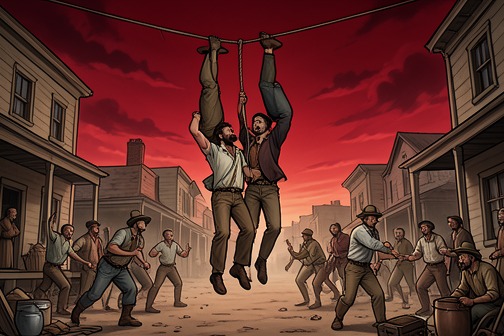
The lynching of [Celie](entity:character-recall-character-celie-e6caa6424a8d)'s biological father and his two brothers destroys a prosperous Black family and exposes the deadly force used to defend white economic dominance. Recounted by [Nettie](entity:character-recall-character-nettie-b030ff5229bb) through [Samuel](entity:character-recall-character-samuel-8ae6e83fd652)'s story, the event connects racial violence in the [American South](entity:location-recall-location-581a57e8d92e) to the novel's wider attention to land, labor, and dispossession.
## The lynching and its economic cause
Samuel's account begins with a well-to-do farmer who owns property near town and prospers both at farming and in business. He opens a dry-goods store, persuades two brothers to help run it, and establishes a blacksmith shop behind the store. The enterprise draws Black customers away from white merchants, while the smithy also takes some white customers; the merchants complain that this competition cannot be allowed to continue. One night, the store is burned, the blacksmith shop is destroyed, and the farmer and his brothers are dragged from their homes and hanged. The attack converts commercial rivalry into racial terror: their success is answered not by fair competition but by the destruction of their property and lives.
## The widow and the children left behind
The violence continued after the hanging through its effects on the farmer’s wife. When neighbors brought her husband’s mutilated, burned body home, the shock nearly killed her; she gave birth to their second daughter at that time. Although her body recovered, her mind did not. She continued setting out her husband’s plate and speaking of the plans they had made together, while neighbors increasingly shunned her. They found those ambitions difficult to imagine for Black people and pitied her attachment to a past that could not return.
The widow still owned land, but she did not know how to farm it, and she kept waiting for her husband to finish his meal and go to the fields. With no one to work the property, she and her young children came to depend on food brought by neighbors and whatever they could find in the yard. The family’s loss thus reached beyond the deaths of the three men: the attack left the widow unable to sustain the household or make use of the land.
While the second daughter was still an infant, a stranger arrived and lavished attention on the widow and her children; they soon married. She became pregnant almost immediately, but her mental health did not improve. In the years that followed, repeated pregnancies weakened her and intensified her instability. Two years before her death she had a daughter, [Olivia](entity:character-recall-character-olivia-b40a5119f315), whom she was too ill to care for, and then a son, [Adam](entity:character-recall-character-adam-7e6d3c5ddcc8). Samuel later recounted this family history to Nettie, whose account connects the lynching to the origins of Celie’s separated children.
## A story carried across histories
Samuel recounts the family history to Nettie almost word for word, making the lynching part of a story passed between people rather than an isolated account of the past. Its economic logic reappears in [Alphonso](entity:character-recall-character-alphonso-9578171d30b5)’s description of how he dealt with white power: he offered white men a share of the crop before planting and arranged for a white man to run the store using white people’s money. His account presents payment and accommodation as a way to keep a business operating within a racial order that had already destroyed the earlier family’s prosperity.
The novel places this American history alongside the seizure of [Olinka Village](entity:location-recall-location-ba43ab673f13) for a rubber plantation. There, road construction and the demand for plantation headquarters displace villagers from the site’s dependable water supply; in Samuel’s account, white merchants answer Black economic success with arson and murder. The situations are not identical, but both show racialized power protecting commercial interests by making Black people bear the costs—in property, livelihood, security, and life.
## Accommodation after the massacre
Alphonso’s later account makes the cost of avoiding a similar attack concrete: before planting, he promised white men one share in every three seeds, and he repeated the arrangement before grinding grain. When he reopened the store, he secured a white manager with white people’s money. His strategy differs sharply from the earlier family’s exposed independence: the lynching shows what white merchants did to Black-owned businesses they could not control, while Alphonso describes surrendering part of the proceeds and using white capital to keep his enterprise operating. The contrast does not make the violence less stark; it reveals how the threat of racial terror could shape the terms on which Black prosperity was permitted.
Event 9
Corrine dies after believing the truth
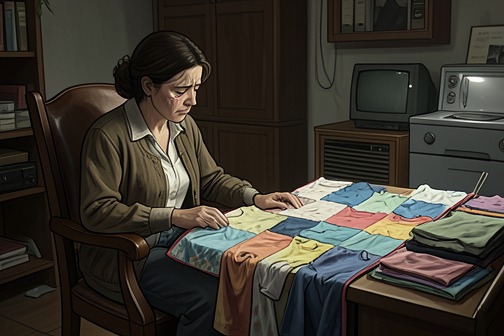
[Corrine](entity:character-recall-character-corrine-fbcc9fdc7d6e)’s death comes after a long-delayed recognition: she finally accepts that [Celie](entity:character-recall-character-celie-e6caa6424a8d) is [Olivia](entity:character-recall-character-olivia-b40a5119f315)’s mother, but only after [Nettie](entity:character-recall-character-nettie-b030ff5229bb) guides her back to a meeting she had tried to forget. In Nettie’s letter, the truth emerges through a quilt made from the children’s outgrown clothes and Corrine’s dresses. Its patterns restore a memory that argument alone could not recover; Corrine’s admission then gives the family a moment of shared understanding before her sudden death.
## The Search for Recognition
For the week before the scene, Nettie has been trying to help Corrine remember meeting Celie in town. Nettie believes that recognizing Celie’s face will make Corrine accept that Olivia is Celie’s child, whether or not she can also accept the same about [Adam](entity:character-recall-character-adam-7e6d3c5ddcc8). Olivia, Nettie insists, has Celie’s face and eyes exactly. The resemblance is so striking to Nettie that Corrine’s failure to see it seems almost impossible to explain.
Nettie’s questions supply precise landmarks: the town’s main street, the hitching post outside Finley’s dry goods store, and the smell of peanut shells. Corrine says that she remembers these details, but not any men speaking to her. The account therefore distinguishes between remembering a place and recovering the encounter that took place there. The details bring the setting close, yet the human connection at the heart of the dispute remains inaccessible.
## The Quilt as Evidence
The route to recognition changes when Nettie remembers Corrine’s quilts. In [Olinka Village](entity:location-recall-location-ba43ab673f13), the men make quilts decorated with animals, birds, and people; after seeing them, Corrine began making her own quilt with alternating squares of appliqued figures and nine-patch blocks. She used clothes the children had outgrown alongside some of her old dresses. What began as a description of Corrine’s craft becomes an unintended record of the period when Olivia was with her.
Nettie searches Corrine’s trunk, hauling out quilts despite Corrine’s protest: “Don’t touch my things, said Corrine. I’m not gone yet.” As Nettie holds each quilt up to the light, she tries to identify the first one she remembers Corrine making and to recall what Corrine and Olivia wore during Nettie’s first months in their household. The search joins two kinds of recollection: the surviving cloth and Nettie’s memory of the people who wore it.
When Nettie finds the quilt, she lays it across the bed and points to a flowered square and a checkered bird, asking Corrine whether she remembers buying the cloth. Corrine traces the patterns with her finger. The gesture precedes recognition: her eyes fill with tears as the designs reconnect her to the time and people she had failed to acknowledge. The quilt matters not simply as a keepsake but as material evidence of a shared past, assembled from the children’s clothing and Corrine’s own dresses.
## Corrine’s Confession
Corrine’s recovered memory reveals why the resemblance had not led her to accept the truth earlier. She says Olivia looked so much like Nettie that she feared the child’s mother would want her back, and that she forgot Celie as quickly as she could. Rather than dwelling on the meeting, she had concentrated on how a store clerk treated her. Corrine recalls being [Samuel](entity:character-recall-character-samuel-8ae6e83fd652)’s wife and a Spelman Seminary graduate, yet being treated like any ordinary Black woman; her hurt and anger became the story she carried home and told Samuel, displacing any account of Celie.
Her confession makes the earlier silence a choice shaped by fear and injured dignity, not proof that the meeting never happened. As Corrine remembers Celie, her question about the sister’s name gives way to recognition. Nettie and Samuel hold her hands while she cries. Nettie tells her that Celie was glad to see Olivia with Corrine and glad the child was alive, because Celie had believed both her children were dead. Samuel responds with sympathy for Celie, and the three sit together talking and holding on to one another until Corrine falls asleep.
## Belief and Death
In the middle of the night, Corrine wakes, turns to Samuel, says, “I believe,” and dies. The brief declaration resolves the central question that has organized Nettie’s efforts: Corrine now accepts the truth about Celie and Olivia. But belief does not reverse the separation or restore the lost time, and the recognition arrives only shortly before Corrine’s death. The scene places acceptance and loss together rather than allowing the recovered memory to become a simple reunion.
Nettie tells the episode as a letter addressed to Celie, making the account itself part of the family’s communication. The sequence is carefully focused: remembered town details fail to unlock the meeting; the quilt supplies a tangible prompt; Corrine explains her suppression of the memory; and her final words confirm that she believes. Her death closes the scene, but the letter carries her recognition to Celie. In that form, Nettie reports both the fact of Corrine’s acceptance and the circumstances that had delayed it, while preserving the tenderness of the family’s last hours together.
Event 10
The Olinka are forced to leave their village

[The Olinka are forced to leave their village](entity:event-recall-event-cd52b96053b1) through a colonial land seizure that turns a promised road into a route for rubber extraction. Reported by [Nettie](entity:character-recall-character-nettie-b030ff5229bb) in a letter to [Celie](entity:character-recall-character-celie-e6caa6424a8d), the displacement is not a single act of removal but a sequence: armed roadbuilders destroy the village, the people are moved away from their water source, and the plantation’s destruction of roofleaf and yam crops undermines both cultural practice and health.
## Land, road, and the promise of access
The Olinka initially treated the road as a possible benefit. Builders spoke of easier travel to the coast, and the villagers imagined the road would connect them to the wider world. That expectation collapsed when construction continued beyond the village, following a plan to extend the road another thirty miles through [Olinka Village](entity:location-recall-location-ba43ab673f13). The road began cutting through [Catherine](entity:character-recall-character-catherine-48275454cf20)’s newly planted yam field before the Olinka were fully awake. The builders carried guns and had orders to shoot, while the villagers, who rarely thought of fighting since the era of tribal wars, could only watch as their crops and homes were destroyed.
The destruction was systematic rather than incidental. The roadbuilders did not alter the route: every hut in its path was leveled, along with the church, school, and Nettie’s hut. The village was left gutted by a tarmac road through its center. The chief went toward the coast to seek explanations and reparations. Two weeks later he returned with news that the whole territory, including the village, belonged to an English rubber manufacturer. The road’s real function was now plain: it served a plantation project, not the people who had expected to use it.
The chief’s journey exposed the scale of the transformation beyond the village. Near the coast, he saw hundreds of villagers clearing forests and planting rubber trees. Giant mahogany and other trees, along with the forest’s game, were being destroyed as land was flattened for production. The governor who had directed the roadbuilders knew the Olinka only from a map. The contrast between the chief’s attempt to speak for his community and the distant administration’s abstract claim to the territory makes the imbalance of power concrete: local presence and use counted for less than a company’s claim and a plan drawn elsewhere.
## Removal from the water source
For as long as they could, the Olinka ignored the road and its builders. They had to confront the project when the builders ordered them to move, intending to use the village site as headquarters for the rubber plantation. The site was valuable not merely for its central position but because it was the only place for miles with a steady supply of fresh water. The people were driven, along with the missionaries, to barren land without water for half the year. In the dry months they had to buy water from the planters; during the rainy season they relied on the river and tried to dig cisterns into nearby rock. Discarded oil drums brought by the builders served as makeshift water containers.
This change in location turned dispossession into continuing dependence. The Olinka lost not only their homes and fields but access to the resource that had made the village site habitable. The new settlement offered no equivalent supply, and the people had to pay the plantation for water on land to which they had been moved. The removal therefore reorganized daily life around the needs of the rubber enterprise: the company took the dependable source, while the displaced community bore the cost of obtaining what it had previously accessed at home.
## Roofleaf and the cost of survival
The loss of roofleaf made the coercion cultural as well as material. In the Olinka’s tradition, roofleaf is revered as a god and is used to cover their huts. The planters first put up separate barracks for men and for women and children, but left them uncovered because the Olinka would not live in a dwelling without a roof of their sacred material. The builders then plowed under the village and the surrounding land, including every remaining stalk of roofleaf. The people’s refusal was not met with accommodation; the material that made their customary homes possible was eliminated.
Nettie’s account of the welcoming ceremony gives this destruction a longer history. In the village’s traditional story, a greedy chief took common land for his own crops and trade, cultivated the land where roofleaf grew, and bought off the elders with goods from coastal traders. A great rainy-season storm later destroyed the village roofs, revealing that roofleaf had disappeared beneath food crops. That remembered story warns of the consequences of treating shared land as a source of private surplus. The plantation’s destruction is different in scale and power: it removes the village and its sacred material altogether, leaving the Olinka with no land on which to restore what has been lost.
After weeks in the sun, a truck arrived carrying corrugated tin sheets. The Olinka had to pay for them. The purchase exhausted their meager savings and nearly wiped out the money Nettie and [Samuel](entity:character-recall-character-samuel-8ae6e83fd652) had set aside for the children’s education when they returned home. As the people struggled to build roofs from the metal, the women’s ululation of sorrow echoed across the cavern walls. The tin provided temporary shelter, but it did so at the cost of savings, future plans, and a material and spiritual relationship to home. Nettie marks this day as the moment the Olinka acknowledged temporary defeat.
## Aftermath and significance
Displacement continues to damage the Olinka after the immediate destruction ends. The planters plowed under the yam crop and substituted canned and powdered food. Yams had been part of the Olinka’s diet for thousands of years and helped protect against malaria and control chronic blood disease. Without enough of them, the remaining people began falling ill and dying at an alarming rate, as malaria spread. The account links land seizure to bodily harm: taking fields and changing what can be eaten also removes knowledge and resources on which health depends.
The Olinka no longer asked Nettie and Samuel for help beyond teaching their children, because they could see how powerless the missionaries and their God were against the plantation. Nettie and Samuel nevertheless decided they must act, and traveled with the children to [England](entity:location-recall-location-edbf4fdebc64) to seek relief for the Olinka from churches and the Missionary Society. At the same time, some people close to them fled to join the mbeles, forest people said to shelter runaways and resist white rule and plantations. The community’s responses thus ranged from education and petition to flight and resistance, while none could restore the lost village.
The event’s force lies in the way its consequences accumulate. A road presented as access becomes an instrument of seizure; the village’s water source becomes plantation property; sacred roofing material disappears; and the replacement settlement brings expense, food insecurity, and illness. The Olinka are not simply moved from one place to another. Their capacity to sustain a community—through land, water, crops, shelter, and shared belief—is progressively dismantled in the name of rubber production.
Event 11
Celie leaves Albert for Memphis
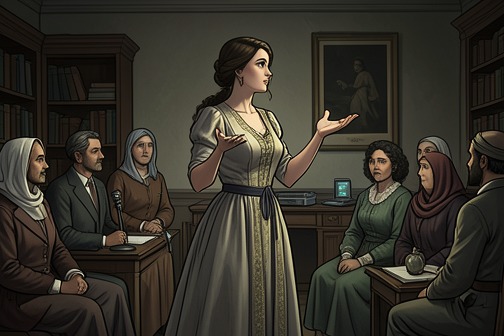
[Celie leaves Albert for Memphis](entity:event-recall-event-celie-albert-ab1f0ac65667) after announcing her decision at a family dinner and refusing to be stopped. The departure is more than a change of place: in front of the people who have witnessed her diminished position, she names [Albert](entity:character-recall-character-albert-6190c3a74040)’s wrongdoing, defends her claim to a life beyond his control, and answers his violence with resistance. The journey with [Shug Avery](entity:character-recall-character-shug-avery-7aeb95e5f242) becomes a concrete break from the marriage and the beginning of a more self-directed life.
## The Dinner and the Announcement
The decisive announcement comes at dinner at [Odessa](entity:character-recall-character-odessa-f865978edf6a)’s house, where Odessa and her husband Jack have raised the children. [Harpo](entity:character-recall-character-harpo-6f4ff9b0fd17) and Mary Agnes (Squeak) are there, along with Harpo and Odessa’s family. The gathering makes the differences in the household visible: the children call Odessa Mama and Mary Agnes Little Mama, but address [Celie](entity:character-recall-character-celie-e6caa6424a8d) as Miss. They reach across Celie as if she were not there. Suzie Q, the only child who appears to pay her sustained attention, sits opposite and squints at her. Celie’s departure is announced in a room where the social arrangements have already placed her at the edge.
After dinner, Shug Avery pushes back her chair, lights a cigarette, and says that it is time to tell everyone something. When Harpo asks what, she says that they are leaving. [Grady](entity:character-recall-character-grady-3de968e01047) frames the move as a time to move on, while Mary Agnes and Celie remain silent, waiting for the response. Shug then makes the plan explicit: Celie is coming with them. The movement from a general announcement to Celie’s inclusion changes the stakes. This is not only Shug Avery and Grady leaving; it is Celie’s decision to go to [Memphis](entity:location-recall-location-b5b0e61d1dc9) with Shug Avery.
## Celie Confronts Albert
Albert’s immediate answer is that Celie will leave only over his dead body. Shug Avery asks whether that is what he wants, remaining cool while he rises from his seat and then drops back down. He turns to Celie and says he thought she was finally happy, asking what is wrong now. Celie answers that Albert himself is the problem. She says that it is time to leave him and enter into Creation, and that his threatened dead body would be only the welcome mat she needs. Her reply converts his attempt to make departure sound impossible into a declaration that she intends to go.
Celie then identifies the injury beneath the confrontation: Albert took [Nettie](entity:character-recall-character-nettie-b030ff5229bb) away from her, and Nettie had been the only person who loved her. Albert sputters rather than answering coherently. Celie adds that Nettie and her children are coming home soon and imagines the family together against him. The announcement ties the move to both separation and hoped-for reunion: Celie is leaving the household that has kept her under Albert’s power while anticipating the return of her sister and children.
The others around the table react with dropped jaws. Their shock marks how far Celie’s speech departs from the role they have seen her occupy. When Celie says that Albert’s children made her life hell on earth, she refuses the family’s appearance of ordinary domestic order. Albert reaches across to slap her; Celie jabs his hand with her case knife. The knife is a specific, immediate defense against the physical blow, and the confrontation shifts from verbal defiance to bodily resistance. Albert insults her for running off to Memphis as if she had no house to look after. Shug Avery challenges the authority of public opinion in response, asking why a woman should care what people think.
## The Curse and the Dust Devil
After the dinner confrontation, Celie’s conflict with Albert continues in a scene of direct verbal challenge. She curses him, and when he asks what that means, she says that everything he touches will crumble until he does right by her. Albert laughs at the prospect that she could curse anyone, reducing her to being Black, poor, ugly, and a woman, and telling her she is nothing. Celie repeats and extends the curse: even what he dreams about will fail. She says the words seem to come to her from the trees, connecting her new voice to the natural world rather than to Albert’s judgment of her worth.
Albert threatens that he should have locked her up and let her out only to work. Celie answers that the jail he plans for her is the one in which he will rot. Shug Avery sees Celie’s face, calls to her, and warns Albert to stop speaking before he makes things harder for himself. When Albert springs toward Celie, a dust devil rises on the porch between them and fills her mouth with dirt. The dirt speaks of the harm Albert would inflict as harm already done to him. Shug Avery shakes Celie, and Celie comes to herself. The scene gives the departure a force beyond the practical plan to travel: Albert’s threats meet resistance, and the natural world echoes the words Celie has spoken.
## Departure and Change
Celie’s declaration of presence follows the confrontation. She names the conditions Albert has used to diminish her—poverty, Blackness, her appearance, and the claim that she cannot cook—and insists that she is here. Shug Avery answers with repeated affirmation. The exchange does not erase the history of control or guarantee that the journey will be easy; it records a change in what Celie can say about herself while standing against Albert.
The departure becomes literal in Celie’s account of the trip to Memphis. Writing to Nettie, she describes being on the road with Shug Avery and Grady, with Grady eager to sit beside Mary Agnes and talking to her about life in North Memphis, clubs, clothes, and beer. The conversation is so continuous that Celie cannot sleep properly while he drives; the talk of drink makes her need to stop, and the travelers find a road into the bushes to relieve themselves. These ordinary details establish that the announced departure has become a journey underway, not merely a threat made at the dinner table.
As an event in Celie’s arc, leaving Albert reverses the terms of their relationship without pretending that the past has been repaired. Albert tries to define her through ownership, domestic duty, and the threat of confinement. Celie names his harm, protects herself when he reaches for her, and goes with Shug Avery toward Memphis. The movement from being treated as absent at Odessa’s table to insisting on her own presence gives the departure its decisive significance: Celie begins to act as someone whose life is not Albert’s to authorize.
Event 12
Nettie and Samuel marry
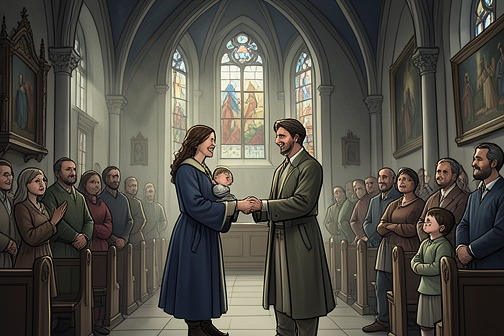
[Nettie and Samuel marry](entity:event-recall-event-nettie-samuel-f9eed6a411e6) in a simple church ceremony in London, turning a long-standing bond of shared work and family life into a declared marriage. The event is also a moment of disclosure: before the ceremony, [Nettie](entity:character-recall-character-nettie-b030ff5229bb) tells [Olivia](entity:character-recall-character-olivia-b40a5119f315) and [Adam](entity:character-recall-character-adam-7e6d3c5ddcc8) that [Celie](entity:character-recall-character-celie-e6caa6424a8d) is their mother and that Nettie is their aunt. Their wedding therefore joins two forms of kinship—the couple’s chosen partnership and the blood relationship that has been hidden from the children.
## Background and Family Ties
Nettie’s love for [Samuel](entity:character-recall-character-samuel-8ae6e83fd652) emerges within a family life already shaped by care, loss, and concealed origins. [Corrine](entity:character-recall-character-corrine-fbcc9fdc7d6e) and Samuel had been unable to have children. They adopted Olivia and Adam after Samuel’s former associate brought the children to their home. The children had been born to a widow whose health and stability deteriorated after she married a stranger; she died after years of repeated pregnancies and declining strength. Olivia and Adam had been born when their mother was too ill to care for them. Samuel and Corrine received them as an answer to their prayers and raised them in a household Nettie describes as loving.
Nettie had entered that household as a missionary and teacher. She accepted Corrine and Samuel’s invitation to help build a school in Africa on the condition that they teach her what she needed to become useful as a missionary and a friend. Their promise began what she calls her real education. In time, she also became a caregiver to the children, whom she loved as family while keeping her own connection to them unspoken. To Celie, Nettie had already explained the concealed truth: Olivia and Adam were Celie’s children, and Nettie was their aunt. That knowledge makes the later disclosure to the children a crucial step toward restoring relationships divided by separation and secrecy.
## Recognition of Love
The turn toward marriage occurs in a moment of shared distress. Samuel is crying because he and Nettie have tried to show the children their love, yet the children reject them and question their connection to their African home and past. Their questions concern why the couple cannot speak the children’s language, remember old ways, or be content in America, where people have motorcars. Samuel’s grief gives Nettie an occasion to comfort him physically: she puts her arms around him and strokes his head and face.
In recounting the moment to Celie, Nettie describes affection that had been buried within her and then comes to recognize as passion. She had loved Samuel as a brother and respected him as a friend, but now understands that she loves him as a man. Her account is intimate and emphatically physical: it attends to his walk, size, shape, smell, hair, palms, inner lip, nose, brows, feet, and eyes. The detailed inventory marks a change in how Nettie understands a relationship that was already close. She does not present their love as suddenly appearing from nowhere; the new recognition gives a different meaning to the affection and companionship that preceded it.
Nettie also anticipates that Celie might judge her revelation harshly, but describes the experience as joyful and ecstatic. The confession to her sister is part of the event’s emotional shape: the marriage is not only a public change of status but an intimate truth Nettie must first acknowledge and communicate. Samuel, too, makes their intention explicit to the children, telling them that they love each other and intend to marry.
## Disclosure and Ceremony
Before the wedding, Nettie insists that the children must hear more about her life, Corrine, and the other woman connected to their family. She tells them about Celie, explains that Celie is their mother, and identifies herself as their aunt. This disclosure places the children’s adoptive family and their birth family in the same account rather than requiring one relationship to erase the other. It also gives the marriage a wider familial setting: the couple’s decision is shared with the children who have been central to their life together.
Olivia asks where Celie is. Nettie explains Celie’s marriage to Mr. ____, while Samuel reassures Adam that they will return to America soon and see about her. Adam is alarmed by what he hears, and Nettie describes him as sensitive to what is left unsaid. The exchange shows that the truth about Celie is not a detached family history for the children; it immediately raises questions about the mother they have not known and the circumstances that separated her from them.
The children stand with Nettie and Samuel at their simple church wedding in London. The ceremony makes their intention concrete in the presence of Olivia and Adam, whose participation follows the revelation of their parentage. Later, after the wedding dinner, Olivia tells Nettie that Adam misses Tashi and is angry because Tashi had planned to have her face scarred when the family left. Nettie had believed that she and the others had helped prevent the cutting of tribal marks on young women’s faces. This concern belongs to the unsettled family future surrounding the wedding: marriage brings Nettie and Samuel together, but it does not resolve the children’s separations, anxieties, or conflicts over cultural practice.
## Significance in the Family Story
Nettie’s marriage changes the terms of a relationship that had long been expressed through friendship, shared work, and care. Its emotional center is her recognition that her love for Samuel is bodily as well as familial, while its public center is the church ceremony attended by the children. The event joins private feeling to an explicit commitment without making either dimension a substitute for the other.
The timing of the disclosure also makes the wedding a hinge in the family story. Nettie tells Olivia and Adam who Celie is before they stand with the couple at the ceremony; marriage thus takes place alongside the recovery of a kinship truth, not apart from it. The children’s adoptive bond with Corrine and Samuel remains part of their history even as their connection to Celie and Nettie becomes known. In [Nettie’s letters](entity:object-recall-object-nettie-s-letters-f3314228768f), the marriage is therefore both a beginning for her and Samuel and one step toward a larger reunion: she has already assured Celie that she is alive, that Olivia and Adam are well, and that the family will come home.
The later reunion makes that promised return visible. When Nettie and Celie meet again, Nettie introduces Samuel, Olivia, Adam, and Adam’s wife, Tashi, to the people gathered around Celie. That encounter does not belong to the London ceremony itself, but it completes the family movement the marriage helps set in motion: a union first declared to the children becomes part of the family Nettie eventually brings back to Celie.
Event 13
Tashi undergoes facial scarification and a womanhood initiation rite

[Tashi undergoes facial scarification and a womanhood initiation rite](entity:event-recall-event-tashi-e25c5fc06f4b) while [Samuel](entity:character-recall-character-samuel-8ae6e83fd652) and [Nettie](entity:character-recall-character-nettie-b030ff5229bb) are away from Olinka, turning a decision made under pressure from her community into a painful rupture among close companions. The event challenges the family’s belief that it had helped stop the cutting, and its consequences are visible in Tashi’s injured face, [Adam](entity:character-recall-character-adam-7e6d3c5ddcc8)’s refusal to meet her hand, and the strain that makes him press to leave.
## Background and Decision
The news first emerges after a simple church wedding in London. [Olivia](entity:character-recall-character-olivia-b40a5119f315) tells Nettie that Adam misses Tashi but is also angry: before the family left, Tashi had been planning to have her face scarred. Nettie had not known this. The family believed one of the things it had helped prevent was the practice of marking young women’s faces, so the disclosure unsettles that belief even before Tashi undergoes the rites.
Olivia explains the choice as bound up with Olinka identity under colonial loss. In her account, the marks allow the Olinka to assert that they still have their own ways, even though white people have taken so much else. Tashi does not want the cutting, but has resigned herself to it in the hope of making her people feel better; she also plans to undergo the female initiation ceremony. Olivia says Tashi would have had the rite at eleven if she had been going to have it, and is now too old for it. Nettie fears the danger of infection, while Olivia has already argued against the practice by pointing out that people in America or Europe do not cut pieces off themselves. Their exchange reveals competing pressures, not a simple choice between custom and rejection: Tashi’s reluctance exists alongside her concern for a community whose traditions are being eroded.
## The Rites and the Search
After the family returns, the grown children go looking for Tashi. They find no trace of her. [Catherine](entity:character-recall-character-catherine-48275454cf20), Tashi’s mother, is said to be planting rubber trees some distance from the compound, but no one has seen Tashi all day. Her absence makes Adam’s and Olivia’s concern immediate: Olivia is deeply disappointed, while Adam tries to appear unconcerned and bites the skin around his nails absentmindedly.
Two days later, the family learns that Tashi has been deliberately hiding. While they were away, she underwent both the facial scarification ceremony and the female initiation rite. The news affects the siblings differently but sharply: Adam turns gray, and Olivia is stricken and more determined than ever to find her. The rites have taken place beyond the family’s view, so their return brings discovery rather than intervention. The discovery also reverses the family’s expectation that its earlier efforts had stopped the cutting.
## Tashi’s Return and Adam’s Rejection
The family does not see Tashi until Sunday. By then she has lost a considerable amount of weight and appears listless, dull-eyed, and tired. Her face remains swollen; half a dozen small, neat incisions sit high on each cheek. These details make the bodily cost of the ceremony concrete. Nettie reports no infection, but the cuts look irritated and red, and Tashi is ashamed of her scars and hardly raises her head.
When Tashi puts out her hand to Adam, he refuses to take it. He looks at her scars, turns on his heel, and leaves. His response makes visible the anger Olivia had described in London and transforms the scars into a point of separation between the two companions. Olivia and Tashi hug instead, but the embrace is quiet and heavy, unlike their usual boisterous, giggling behavior. Their reunion offers care without undoing the hurt or restoring the earlier ease between them.
## Community Pressure and Aftermath
The event belongs to a wider practice the family witnesses among the villagers: young women, and even men, have identification carved into their faces. Nettie describes children who regard scarification as backward and resist it, while the carving is nevertheless carried out by force and under appalling conditions. The family provides antiseptics, cotton, and a place for the children to cry and tend their wounds. That response distinguishes the community’s effort to care for those injured from an ability to prevent the practice itself.
Adam presses each day for the family to leave for home. He can no longer bear their way of living, and the surroundings near them offer no trees, only large boulders and smaller rocks; more of his companions are also running away. Nettie identifies the deeper cause as his inability to bear his conflicting feelings about Tashi. She thinks Tashi is beginning to understand the magnitude of her mistake, but presents that as her own judgment, not as a resolution between them. The rite thus leaves its consequences unsettled: Tashi is ashamed and injured, Adam withdraws, and the family’s presence has not reconciled its opposition to the cutting with the losses and pressures shaping Olinka life.
Event 14
Celie inherits her parents' house, land, and store
[Celie inherits her parents' house, land, and store](entity:event-recall-event-celie-386459ac4393) when the reading of [Alphonso](entity:character-recall-character-alphonso-9578171d30b5)’s will reveals that the property was never his to give away: her biological father owned it, left it to her mother, and it passed to [Celie](entity:character-recall-character-celie-e6caa6424a8d) and [Nettie](entity:character-recall-character-nettie-b030ff5229bb) after their mother died. The discovery reverses Celie’s understanding of what she has lost and what she can claim. A house and store become more than an inheritance; they offer a home for the family Celie has been separated from and a new basis for her independence.
## The Death and the Will
The news arrives in a telephone call from Daisy, Alphonso’s young wife. Celie has already heard that the man everyone called Pa is dead, but the name still holds the force of a family fiction: her mother had always called him her Pa, and Celie never remembers hearing her use his name. Daisy tells her that Alphonso died in his sleep, though not quite while sleeping; she and Alphonso had been together in bed. Celie offers her sympathy, receiving the news without knowing yet that it will alter her own life.
Daisy then reveals that she, too, expected the house to be hers. At the previous day’s reading of the will, she learned that the place belonged instead to Celie and Nettie. Their real father had owned the land, the house, and the store; he left them to their mother, and after their mother’s death the inheritance passed to the two sisters. The revelation separates the source of the property from the stepfather who had concealed Celie’s parentage. Alphonso’s death brings the secret into view, but it is the will that establishes the sisters’ claim.
Celie’s first response is to reject anything that might be associated with Alphonso. Daisy’s reminder that Nettie may not feel the same way interrupts that refusal. Shug, beside Celie, helps her recognize that the inheritance is not a gift from the stepfather but property her parents left to their daughters. The distinction changes the meaning of accepting it: Celie need not accept Alphonso’s authority or forgive his concealment in order to claim what belongs to her and Nettie.
## Claiming the Property
The scale of the inheritance startles Celie. The house is larger than Shug’s, has land around it, and comes with a dry-goods store. Celie immediately wonders what the sisters might sell there; Shug suggests pants, connecting the inherited business premises to Celie’s own work making clothes. The possibility is practical as well as symbolic: the store could become a place for her labor and enterprise, rather than another household controlled by someone else.
After the telephone call, Celie and Shug hurry back to inspect the property. On the way, Celie turns into the colored cemetery and finds Alphonso’s grave. His monument presents him as a leading businessman and farmer, an upright husband and father, and a benefactor to the poor and helpless. Fresh flowers remain on the grave, while Celie knows the hidden family history that the public memorial does not tell. The contrast makes the inheritance discovery part of a larger unmasking: the respectable account of Alphonso’s life stands beside the secret that he withheld the truth about the property and Celie’s parentage.
At the house, Daisy explains that the old house Celie remembers was torn down and replaced by the present one, designed by an Atlanta architect. Tiles from New York appear throughout it—in the kitchen and toilet, on the back porch, and around the fireplaces in both parlors. Daisy has taken the furniture because Alphonso bought it specially for her, but she gives Celie the keys to the house that goes with the land. Celie runs from room to room, overwhelmed by the fact that it is hers. Shug hugs her, and Celie stands still to receive the embrace, a small bodily pause within the rush of discovery.
## A Home for the Family
Shug brings cedar sticks and lights them. Together she and Celie begin at the top of the house, in the attic, and smoke their way down to the basement, driving out evil and making a place for good. The ritual marks the shift from receiving keys to making the house inhabitable in Celie’s own terms. The building is not merely transferred to her; she and Shug enact its change from a property associated with Alphonso into a home they can claim.
That sense of home is bound to the sisters’ children and the years of separation. Nettie has written that she is alive, that [Olivia](entity:character-recall-character-olivia-b40a5119f315) is well, and that Celie’s son is well too; she has also said that the family will come home. Earlier, Nettie explained that Olivia and [Adam](entity:character-recall-character-adam-7e6d3c5ddcc8) are Celie’s children, raised by [Corrine](entity:character-recall-character-corrine-fbcc9fdc7d6e) and [Samuel](entity:character-recall-character-samuel-8ae6e83fd652) after Samuel took them in. The inheritance therefore gives Celie a concrete answer to the question of where her absent family might belong. She sees the house as large enough for herself, Nettie, their children, Samuel, and Shug, and tells Nettie she now has a home to return to.
When Nettie eventually arrives with Samuel, Olivia, Adam, and Adam’s wife, Tashi, Celie recognizes the family gathering the house had come to represent. The reunion is not simply a consequence of owning property: it follows years of separation and the recovery of concealed kinship. But the inherited home gives that reunion a place to take shape. In the event’s movement from a telephone call, to a will, to a house entered and cleansed, ownership becomes belonging. Celie’s claim to the property restores a connection to her parents’ legacy while making room for the family she and Nettie have struggled to recover.
Event 15
Shug's romance with Germaine takes her away from Celie
[Shug Avery](entity:character-recall-character-shug-avery-7aeb95e5f242)’s romance with Germaine interrupts the life she and [Celie](entity:character-recall-character-celie-e6caa6424a8d) have built together and makes separation the price of Shug’s desire for a new relationship. The rupture is especially painful because Shug has treated Celie as her habitual confidante: she wants to tell Celie about Germaine even as that confidence exposes the very intimacy it can no longer protect. Celie’s account follows the break from its first disclosure through Shug’s departure, her prolonged absence, and her eventual announcement that she is coming home.
## The disclosure and its setting
Celie recounts the news in a letter to [Nettie](entity:character-recall-character-nettie-b030ff5229bb), beginning from the hurt it causes and wondering whether events might have gone differently had she stayed in [Memphis](entity:location-recall-location-b5b0e61d1dc9) the previous summer. Instead, she spent that summer repairing the house, wanting it ready if Nettie came soon. It is now pretty and comfortable, and Celie has found a woman to live there and look after it. The domestic preparations do not prevent the emotional upheaval: Celie says she came home to Shug, and it is in that homecoming that Shug’s new attachment comes into view.
Shug takes a slip of paper from her pocket slowly, as if afraid of what it might say. The message identifies her attraction to a nineteen-year-old boy. Celie reads it aloud, but at first does not understand what Shug is trying to tell her. She has not been thinking about boys, or men, and needs Shug to explain that the paper refers to someone specific: Germaine, the newest man in Shug’s band.
Shug explains that she hired Germaine the year before, nearly deciding against it because he could play only the flute. She had doubted that a flute belonged in blues music; hearing him play changed her mind. Her account begins with his musical ability, then becomes a stream of admiration for his appearance and movement. She describes his dancing feet and hair with growing excitement. Celie, who usually hears everything from Shug, now has to listen to an exuberance that makes her feel the loss before the relationship has even been fully explained.
## A request that cannot repair the hurt
Celie interrupts Shug’s praise to tell her that it is killing her. Shug stops midstream, her eyes fill with tears, and she apologizes: she has been desperate to tell somebody, and Celie is the person she usually tells. The scene turns on this painful contradiction. Shug’s trust in Celie remains real, but the confidence that once signaled closeness now delivers news of a desire directed elsewhere. Celie answers with dark humor about the harm the words have done; the joke registers the injury rather than cancelling it.
Shug asks for six months to have what she calls her last fling, saying she is too weak a woman not to pursue it. She promises that afterward she will try to make their life together as it was. Celie writes back that this promise will not be enough. When Shug asks whether Celie loves her, she is on her knees and crying. Celie’s heart hurts so intensely that she wonders how it can keep beating, but she tells Shug that she loves her whatever happens and whatever Shug does. Love survives the disclosure, but it does not make the proposed arrangement bearable: Celie says she cannot stay there.
Shug pleads with Celie not to leave, calling her a friend and saying she is frightened. She also acknowledges the disparity between herself and Germaine: he is a third of her age, a third of her size, and even a third of her color. Her attempt to laugh does not conceal her fear that he will hurt her more than she is hurting Celie. The exchange leaves both women exposed to different forms of vulnerability: Celie cannot remain in the house while Shug pursues Germaine, while Shug asks to retain Celie’s love and friendship during that pursuit.
## Departure and the six months afterward
A doorbell cuts into the conversation. Shug wipes her face, answers the door, sees who is there, and continues out. Celie soon hears a car drive away, then goes upstairs; sleep remains distant that night. The account does not name the visitor at the door, but later details place Germaine within the separation: Shug’s requested six months pass without her return, and Celie reports that Shug and Germaine are living together. The departure therefore gives immediate form to the choice the conversation has made unavoidable, even though the relationship between the visitor and the car is left unstated in that moment.
When six months have come and gone, Celie says Shug has not come back. Celie tries to teach her heart not to want what it cannot have. She does not reduce the years she shared with Shug to this departure: she remembers the good years Shug gave her, and describes Shug as learning new things in her new life. Shug and Germaine are staying with one of Shug’s children in [Tucson](entity:location-recall-location-3e81e53465ef). In a letter, Shug explains that two of her children are alive and doing well but do not want to see her, while the child who welcomes her is a schoolteacher working on an Indian reservation. Celie’s account thus places the romance within a wider, unsettled family life, without suggesting that the new relationship has resolved Shug’s estrangement from her other children.
## An ending held open
The separation is not presented as a clean or final severing. Later, Celie reaches a point at which she knows she can live content without Shug. [Albert](entity:character-recall-character-albert-6190c3a74040) has asked her to marry him again, this time in spirit as well as in the flesh; Celie refuses the proposal while offering friendship. Only after that change does Shug write that she is coming home. The sequence matters: Shug’s announcement arrives when Celie has begun to imagine a life not organized around her return, rather than as the fulfillment of the six-month promise.
The event’s force lies in the distance between love and possession. Celie continues to love Shug, but she cannot make Shug’s proposed fling compatible with staying beside her; Shug, meanwhile, wants both the freedom to pursue Germaine and the reassurance of Celie’s enduring affection. The six-month request becomes a longer absence, and the return is, at this point, only announced. Celie’s calm at the news leaves the reunion unresolved while marking a change in her: she can receive the possibility of Shug’s return without the earlier desperation that made separation seem impossible.
Event 16
Nettie's family is mistakenly reported dead in a shipwreck

[Nettie's family is mistakenly reported dead in a shipwreck](entity:event-recall-event-nettie-d5a7d330d866) after [Celie](entity:character-recall-character-celie-e6caa6424a8d) receives a telegram saying that the ship carrying [Nettie](entity:character-recall-character-nettie-b030ff5229bb), her husband, and their children from Africa sank after striking German mines. The report is not confirmation that they died, but Celie experiences it as a devastating apparent loss, intensified by the return of the letters she had written to Nettie over the years.
## The Telegram and Its Report
The news reaches Celie in a telegram from the [United States](entity:location-recall-location-5d55e9152db1) Department of Defense. It identifies the ship as the one Nettie, her husband, and the children left Africa aboard and says it was sunk by German mines off the coast of a place Celie renders as Gibralta. The telegram reports that they are thought to have drowned; it offers no confirmation of their deaths. The distinction between presumed loss and verified fate leaves the event suspended between news and uncertainty.
## The Returned Letters
The telegram arrives on the same day that all the letters Celie had written Nettie over the years come back unopened. Celie emphasizes that this telegram is the only piece of mail Mr. _____ ever placed directly in her hand. The juxtaposition makes the apparent shipwreck more than a report from far away: the returned correspondence shows that the sisters’ separation has persisted without the exchange Celie had hoped for, and the telegram seems to close off the possibility of an answer.
## Celie's Response and the Letter's Form
Writing directly to Nettie, Celie describes sitting alone in the big house and trying to sew, then asks herself what sewing—or anything—can accomplish. Her despair reaches beyond grief for the reported deaths: being alive itself begins to feel like an awful strain. Because the news is presented in a letter addressed to the person believed lost, the account makes Celie's act of writing carry a painful contradiction: she continues speaking to Nettie at the very moment she fears Nettie can no longer receive her words. The passage records an apparent bereavement, not the family's actual fate.
Event 17
Celie and Albert rebuild their friendship
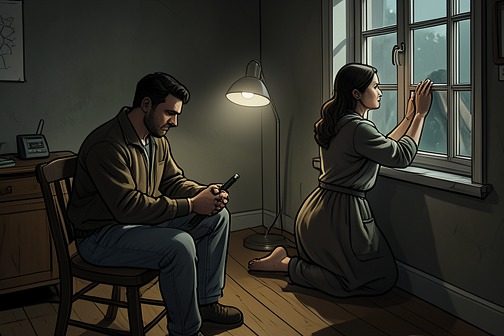
[Celie and Albert rebuild their friendship](entity:event-recall-event-celie-albert-a476a24ff448) after the abuse that defined their marriage, creating a relationship in which honesty and shared work replace coercion. Their reconciliation does not make the past disappear: it depends on [Albert](entity:character-recall-character-albert-6190c3a74040)’s recognition of the harm he caused, [Celie](entity:character-recall-character-celie-e6caa6424a8d)’s ability to speak about what she feels, and a new companionship that does not require her to accept him as a husband again.
## From harm to understanding
The change begins with Albert becoming someone Celie can talk to about her feelings. He seems to be the only person who understands them, a striking contrast with the marriage in which he controlled and hurt her. Celie does not claim that the harm was small or that she has forgotten it. Instead, she explains why she does not hate him: he loves [Shug Avery](entity:character-recall-character-shug-avery-7aeb95e5f242), Shug once loved him, and he appears to be trying to make something of himself. Her judgment rests partly on observable change. Albert works, cleans up after himself, appreciates the world around him, and, most important to her, listens when she speaks.
Albert’s account of his own change is modest but consequential. He describes feeling, for the first time, that he is living on Earth as a natural man, as though life has become a new experience. The change appears not as a claim that he has repaired everything, but as a new capacity to attend to another person. That attentiveness matters when he recognizes that Celie’s love for Shug is not something he needs to guess at or dismiss. He distinguishes what people do with their bodies from love, which he says he knows through having loved and been loved. His words allow Celie’s love to exist without treating it as a grievance against him.
## Naming the history of violence
Albert’s new understanding is tied to a particular admission about the marriage: he told Shug that he beat Celie because Celie was herself and not Shug. Celie already knows this, and does not blame Albert for telling her. The confession gives the violence a motive that is painful precisely because it makes Celie’s mistreatment inseparable from Albert’s desire for another woman. His willingness to speak about it now, and Celie’s ability to hear him without either denying the harm or reducing him to it, mark a real change in their conversation.
Albert also places that violence within his own earlier history without using it to excuse himself. He recalls that his father chose his first wife, [Annie Julia](entity:character-recall-character-annie-julia-f331114083c7), because his father was in charge and wanted that marriage. Albert did not want the match; he wanted Shug. After Annie Julia was married off to him, her family behaved as if they had cast her away. Albert and Shug both mistreated her, and she told nobody; she had no one to tell. The recollection reveals a pattern in which women were deprived of choice and left without support. It also gives weight to the difference between that silence and Celie’s present ability to tell Albert what she thinks and feels.
## Friendship in ordinary life
The renewed bond takes shape in everyday encounters, not only in conversations about remorse. Sofia and [Harpo](entity:character-recall-character-harpo-6f4ff9b0fd17) try to arrange dates for Celie, although they know she loves Shug and assume women might love whichever man is available. When a salesman presses his attention on Celie at Harpo’s juke joint, Albert comes to her aid by identifying himself as her husband, and the man leaves. The gesture recalls their former marriage, but its immediate effect is to protect Celie from unwanted attention rather than to reassert control over her.
Afterward, Celie and Albert sit together with a cold drink and talk about their days with Shug. They remember her illness, the crooked song she used to sing, and their evenings at Harpo’s. These recollections connect them through a shared past without making that past a demand on Celie. Their friendship can include memories of loving Shug while leaving room for Celie’s continuing attachment to her. When Celie speaks of missing Shug, Albert does not dismiss the feeling; he understands it.
Shared work gives their changed relationship another form. Albert tells Celie that when he was growing up he tried to sew alongside his mother, who was always sewing, but people laughed at him. Celie answers that no one will laugh at him now and invites him to help stitch pockets. When he admits he does not know how, she offers to show him—and does. The moment reverses the old imbalance: Albert is the novice, Celie the teacher, and the work proceeds on her terms. Later, he is busy patterning a shirt to go with her pants. He insists that it needs pockets and loose sleeves and should not be worn with a tie, extending their collaboration into the design of clothes made for people to wear.
## A proposal declined, a friendship affirmed
Albert eventually asks Celie to marry him again, this time in spirit as well as in the flesh. The proposal shows the seriousness of his affection, but Celie does not accept it. She says she still does not like frogs, yet proposes that they remain friends. Her answer distinguishes intimacy from marriage: reconciliation has brought them close again, but it has not restored the old marital arrangement or required Celie to surrender her independence.
The timing makes the distinction especially clear. Just as Celie knows she can live content without Shug, and just after Albert’s proposal and her answer, Shug writes that she is coming home. Celie responds with calm rather than the despair she once associated with Shug’s absence. The announcement changes what lies ahead, but it does not cancel the friendship Celie and Albert have built. Their relationship has become capable of holding separate attachments, painful history, and a future that remains open.
Event 18
Shug returns to Celie
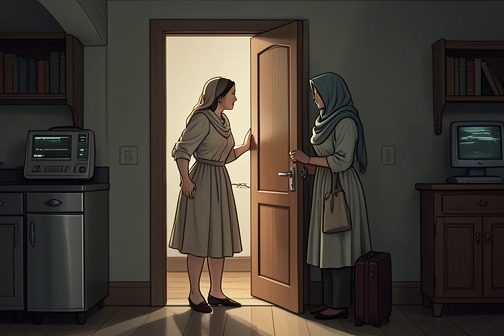
[Shug Avery](entity:character-recall-character-shug-avery-7aeb95e5f242)’s return brings a long separation to a close at a moment when [Celie](entity:character-recall-character-celie-e6caa6424a8d) has stopped making her own contentment depend on Shug’s presence. Celie welcomes her affectionately, but the reunion does not simply restore an earlier arrangement: Shug has ended her relationship with Germaine, Celie has declined [Albert](entity:character-recall-character-albert-6190c3a74040)’s renewed marriage proposal, and their exchange makes room for love that can endure without possession.
## Before Shug Comes Home
The news arrives after Celie has imagined a life in which Shug might not return. Albert has asked Celie to marry him again, this time in both a spiritual and physical sense, and Celie has refused. She instead proposes that they remain friends. The difference matters: Albert’s earlier role in Celie’s life was defined by abuse and control, whereas this late exchange presents a relationship she can choose without resuming marriage. Celie’s refusal is not a rejection of all connection with him; it draws a boundary around the form that connection will take.
Shug’s letter announcing that she is coming home reaches Celie just after this decision. Celie describes herself as calm: if Shug comes, she will be happy; if she does not, Celie will be content. That balance marks a change from longing organized around Shug’s absence. The return is still welcome and emotionally consequential, but Celie no longer treats it as the condition for her own ability to live well. Her interpretation that this may be the lesson she was meant to learn frames the event as both a reunion and a test of a newly secured independence.
## Arrival and Recognition
Shug steps out of the car dressed in a way Celie likens to a moving star and tells her that she has missed Celie more than her own mother. Celie and Shug embrace. The scene gives their reunion its force through a direct bodily gesture rather than an explanation of everything that happened during the separation: Shug has come back, Celie receives her, and the embrace confirms that affection has survived distance.
Shug admires the house and Celie’s room. Its walls and furnishings are purple and red, while the floor is bright yellow; the room expresses a vivid, individual taste rather than a neutral setting for Shug’s return. Shug goes straight to a small purple frog on the mantelpiece. Celie explains that Albert carved it for her, and the two women look at one another before laughing. The carved object gathers several changes into one small exchange: it belongs to Celie’s home, comes from Albert, and is now something she can show Shug without turning it into a contest between them. Their shared laughter signals ease, not a demand that the past be erased.
## Changed Attachments
Shug asks about Germaine, and Celie asks where he is. Shug says that he is at Wilberforce, where he is in college, and that their relationship is over. She now regards him as family, like a son or perhaps a grandson. The account gives a concrete measure of what has changed during Shug’s absence: Germaine remains part of her affections, but no longer as a lover. The return is therefore not a simple resumption of the relationship at the point where it broke off; Shug comes back with a different account of that attachment.
Shug then asks what Celie and Albert have been doing. Celie says that they have done little, and Shug teasingly suggests that Albert must have been up to something, given how fine Celie looks. The exchange leaves space for humor and for Shug’s interest in Celie’s life, but Celie does not answer by claiming that Albert has replaced Shug or that their friendship has become a romance. Instead, she tells Shug that they have talked about her and how much they love her. Shug smiles, rests her head on Celie’s breast, and lets out a long breath. The gesture receives Celie’s reassurance without requiring a declaration that the relationships are interchangeable: Albert’s friendship and Shug’s intimacy both have a place in Celie’s life.
## Reunion Within a Larger Family
Shug’s homecoming occurs in the novel’s closing movement toward reunion, but it is distinct from the later arrival of [Nettie](entity:character-recall-character-nettie-b030ff5229bb) and her family. When Nettie finally appears, she introduces [Samuel](entity:character-recall-character-samuel-8ae6e83fd652), [Olivia](entity:character-recall-character-olivia-b40a5119f315), [Adam](entity:character-recall-character-adam-7e6d3c5ddcc8), and Adam’s wife, Tashi; Celie identifies Shug and Albert among the people gathered to meet them. Nettie has held Celie around the waist, and the family members greet one another before Shug and Albert begin hugging them in turn. These later introductions place Shug’s return within a widening circle of kinship, rather than making her the only bond around which Celie’s ending is organized.
That distinction clarifies the significance of the homecoming. Shug returns to a Celie who can welcome her without surrendering the contentment she has learned to sustain, while the closing gathering makes room for biological, marital, adoptive, and chosen ties together. The event resolves the immediate separation between Shug and Celie through an embrace, shared laughter, and renewed closeness; it does not undo the intervening changes or reduce Celie’s life to a single relationship. Its ending is an acceptance of connection on altered terms.